
September 25, 2018
While a warming climate in recent decades may be a factor in the waning of some local populations of frogs, toads, newts and salamanders, it cannot explain the overall steep decline of amphibians, according to researchers.

September 21, 2018
The State Horticultural Association of Pennsylvania and the Pennsylvania Apple Program recently awarded nearly $233,000 in funding to support new and ongoing fruit research and extension projects in Penn State's College of Agricultural Sciences. The grants will support projects aimed at enhancing pest management, production efficiency and fruit quality.

September 20, 2018
Andrew Read has been appointed director of the Huck Institutes of the Life Sciences at Penn State effective Jan. 1, 2019. Read is an Evan Pugh University Professor of Biology and Entomology, Eberly Professor of Biotechnology and director of the Center for Infectious Disease Dynamics.

September 18, 2018
Despite many decades of annual brook trout stocking in one northcentral Pennsylvania watershed, the wild brook trout populations show few genes from hatchery fish, according to researchers who genotyped about 2,000 brook trout in Loyalsock Creek watershed, a 500-square-mile drainage in Lycoming and Sullivan counties celebrated by anglers for its trout fishing.

September 13, 2018
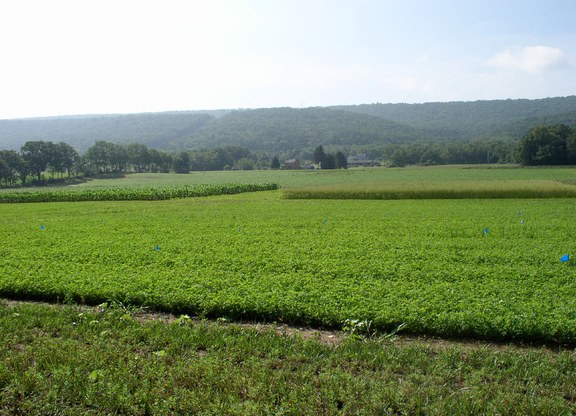
If the majority of dairy farms in Pennsylvania fully adopt conservation best-management practices, the state may be able to achieve its total maximum daily load water-quality target for the Chesapeake Bay, according to researchers.
September 13, 2018
Penn State’s Social Science Research Institute, in collaboration with the Clinical and Translational Science Institute, has awarded over $200,000 in funding to support 10 new interdisciplinary teams of Penn State researchers whose work is aimed at combating the opioid epidemic.

September 12, 2018
Research combining technology and the outdoors is ‘Transforming Outdoor Places into Learning Spaces’ for children and families.

September 11, 2018
The farther away from a city a person is raised, the more likely they are to climb the economic ladder. Economists also found that community characteristics associated with upward mobility actually have different effects in rural and urban locations.

September 10, 2018
The National Science Foundation has awarded a $3 million grant to an interdisciplinary team of Penn State researchers to create a new graduate program that will train students to find solutions to real-world problems facing Food-Energy-Water (FEW) systems.

September 10, 2018
Soil may be a natural filter that can act as a tertiary treatment for wastewater, preventing antibiotics from contaminating groundwater, according to researchers who conducted a study at Penn State's Living Filter.

August 30, 2018
Penn State’s Center for Security Research and Education (CSRE) invites Penn State faculty to apply for the CSRE Faculty Fellows Program. The deadline for spring 2019 applications is Nov. 1.

August 29, 2018
There’s a new insect causing a “buzz” in the northeastern United States — and two Brandywine faculty members have joined a University-wide effort to educate the public.

August 27, 2018
Researchers in Penn State's College of Agricultural Sciences are among an interdisciplinary team dedicated to elevating Hondurans — especially women — by teaching them how to diversify their farm operations to improve family diet and income, while advancing gender equality.

August 22, 2018
In the world of plant-feeding insects, who shows up first to the party determines the overall success of the gathering; yet viruses can disrupt these intricate relationships, according to researchers at Penn State.

August 20, 2018
Nutrient pollution is a major issue affecting water quality around the world: the U.S. Environmental Protection Agency names it “one of America's most widespread, costly and challenging environmental problems.” The Chesapeake Bay, with some 64,000 square miles of land draining into a shallow, narrow body of water just 200 miles long, is in some respects a worst-case scenario. Over the last 10 years, Penn State's College of Agricultural Sciences has taken a lead role in solving this problem.

August 17, 2018
Alyssa Bakke, a staff sensory scientist in the Department of Food Science who has expertise in food choice and consumer behavior, will be speaking at August's Science on Tap event at 7 p.m. on Aug. 21 at the Liberty Craft House in State College.

August 16, 2018
Researchers showed that feeding white button mushrooms to mice changed the composition of gut microbes to produce more short chain fatty acids, specifically propionate from succinate. Previous research has shown that succinate and propionate can change the expression of genes needed to manage glucose production. A better understanding this connection between mushrooms and gut microbes in mice could one day pave the way for new diabetes treatments and prevention strategies for people.

August 16, 2018
A National Science Foundation-funded Penn State project will evaluate the accuracy of using Twitter data to represent populations across different demographic groups.

August 9, 2018
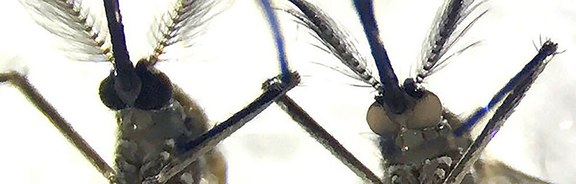
UNIVERSITY PARK, Pa. — A technology designed to improve CRISPR-Cas9 gene editing in mosquitoes and other arthropods succeeds with a high degree of efficiency, while eliminating the need for difficult microinjection of genetic material, according to researchers.
August 8, 2018
Anywhere large-bodied mammalian carnivore species are present, other, smaller carnivores are less likely to occur, according to an international team of researchers that conducted the first global assessment of carnivore interactions using camera trap data.

August 6, 2018
Understanding the economic, health, behavioral and educational effects of labor migration on children is one aspect of a three-year, interdisciplinary research project that is being carried out by researchers in Penn State's Colleges of Agricultural Sciences, Liberal Arts, Earth and Mineral Sciences, Health and Human Development, and Education.

August 6, 2018
Penn State's College of Agricultural Sciences helped to assemble a multistate, interdisciplinary task force of more than 80 university, regulatory and agricultural industry representatives to fight the looming threat presented by the spotted lanternfly.

July 31, 2018
Research underway at the Joseph Valentine Turfgrass Research Center on the University Park campus is focusing on the effectiveness of a neonicotinoid insecticide — imidacloprid — in controlling grub populations.

July 31, 2018
Drinking water from wells in rural north central Pennsylvania had low levels of pharmaceuticals, according to a study led by Penn State researchers.

July 25, 2018
Researchers in Penn State's College of Agricultural Sciences examined the use and user-friendliness of SILVAH-Oak — short for Silviculture of Allegheny Hardwoods — a decision-support tool developed by the U.S. Forest Service for making silvicultural decisions in mixed oak forests.

July 19, 2018
Poor mental health may cost businesses nearly as much as physical health problems, according to researchers. A single extra poor mental health day in a month was associated with a 1.84 percent drop in the per capita real income growth rate, resulting in $53 billion less total income each year.

July 18, 2018
High bitter-taste sensitivity is associated with a significantly increased risk of cancer in older British women, according to researchers who conducted a unique study of 5,500 women whose diet, lifestyle and health has been tracked for about 20 years.

July 12, 2018
How forests respond to elevated nitrogen levels from atmospheric pollution is not always the same. While a forest is filtering nitrogen as expected, a higher percentage than previously seen is leaving the system again as the potent greenhouse gas nitrous oxide, say researchers.

July 11, 2018
Rural communities are often tied to agriculture, but finding new ways to inspire innovation in those communities may help create new companies, improve farming, and create more diverse economies. A $500,000 grant from USDA is aimed at doing that.

July 5, 2018
When gypsum — a source of sulfate — finds its way into low-oxygen manure-storage facilities via removal as soiled bedding, this innocuous product can turn into a deadly gas with a few moves of an agitation device, a dangerous threat that researchers in Penn State's College of Agricultural Sciences believe can be counteracted with an additive.

Office for Research and Graduate Education
Address
217 Agricultural Administration BuildingUniversity Park, PA 16802-2600
- Email agresearch@psu.edu
- Office 814-865-3136
Office for Research and Graduate Education
Address
217 Agricultural Administration BuildingUniversity Park, PA 16802-2600
- Email agresearch@psu.edu
- Office 814-865-3136
