
August 27, 2018
Researchers in Penn State's College of Agricultural Sciences are among an interdisciplinary team dedicated to elevating Hondurans — especially women — by teaching them how to diversify their farm operations to improve family diet and income, while advancing gender equality.

August 22, 2018
In the world of plant-feeding insects, who shows up first to the party determines the overall success of the gathering; yet viruses can disrupt these intricate relationships, according to researchers at Penn State.

August 20, 2018
Nutrient pollution is a major issue affecting water quality around the world: the U.S. Environmental Protection Agency names it “one of America's most widespread, costly and challenging environmental problems.” The Chesapeake Bay, with some 64,000 square miles of land draining into a shallow, narrow body of water just 200 miles long, is in some respects a worst-case scenario. Over the last 10 years, Penn State's College of Agricultural Sciences has taken a lead role in solving this problem.

August 17, 2018
Alyssa Bakke, a staff sensory scientist in the Department of Food Science who has expertise in food choice and consumer behavior, will be speaking at August's Science on Tap event at 7 p.m. on Aug. 21 at the Liberty Craft House in State College.

August 16, 2018
Researchers showed that feeding white button mushrooms to mice changed the composition of gut microbes to produce more short chain fatty acids, specifically propionate from succinate. Previous research has shown that succinate and propionate can change the expression of genes needed to manage glucose production. A better understanding this connection between mushrooms and gut microbes in mice could one day pave the way for new diabetes treatments and prevention strategies for people.

August 16, 2018
A National Science Foundation-funded Penn State project will evaluate the accuracy of using Twitter data to represent populations across different demographic groups.

August 9, 2018
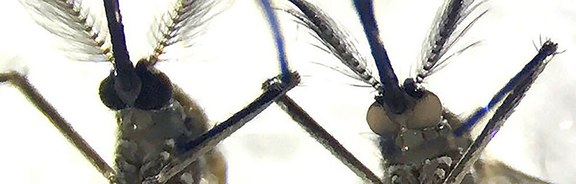
UNIVERSITY PARK, Pa. — A technology designed to improve CRISPR-Cas9 gene editing in mosquitoes and other arthropods succeeds with a high degree of efficiency, while eliminating the need for difficult microinjection of genetic material, according to researchers.
August 8, 2018
Anywhere large-bodied mammalian carnivore species are present, other, smaller carnivores are less likely to occur, according to an international team of researchers that conducted the first global assessment of carnivore interactions using camera trap data.

August 6, 2018
Understanding the economic, health, behavioral and educational effects of labor migration on children is one aspect of a three-year, interdisciplinary research project that is being carried out by researchers in Penn State's Colleges of Agricultural Sciences, Liberal Arts, Earth and Mineral Sciences, Health and Human Development, and Education.

August 6, 2018
Penn State's College of Agricultural Sciences helped to assemble a multistate, interdisciplinary task force of more than 80 university, regulatory and agricultural industry representatives to fight the looming threat presented by the spotted lanternfly.

July 31, 2018
Research underway at the Joseph Valentine Turfgrass Research Center on the University Park campus is focusing on the effectiveness of a neonicotinoid insecticide — imidacloprid — in controlling grub populations.

July 31, 2018
Drinking water from wells in rural north central Pennsylvania had low levels of pharmaceuticals, according to a study led by Penn State researchers.

July 25, 2018
Researchers in Penn State's College of Agricultural Sciences examined the use and user-friendliness of SILVAH-Oak — short for Silviculture of Allegheny Hardwoods — a decision-support tool developed by the U.S. Forest Service for making silvicultural decisions in mixed oak forests.

July 19, 2018
Poor mental health may cost businesses nearly as much as physical health problems, according to researchers. A single extra poor mental health day in a month was associated with a 1.84 percent drop in the per capita real income growth rate, resulting in $53 billion less total income each year.

July 18, 2018
High bitter-taste sensitivity is associated with a significantly increased risk of cancer in older British women, according to researchers who conducted a unique study of 5,500 women whose diet, lifestyle and health has been tracked for about 20 years.

July 12, 2018
How forests respond to elevated nitrogen levels from atmospheric pollution is not always the same. While a forest is filtering nitrogen as expected, a higher percentage than previously seen is leaving the system again as the potent greenhouse gas nitrous oxide, say researchers.

July 11, 2018
Rural communities are often tied to agriculture, but finding new ways to inspire innovation in those communities may help create new companies, improve farming, and create more diverse economies. A $500,000 grant from USDA is aimed at doing that.

July 5, 2018
When gypsum — a source of sulfate — finds its way into low-oxygen manure-storage facilities via removal as soiled bedding, this innocuous product can turn into a deadly gas with a few moves of an agitation device, a dangerous threat that researchers in Penn State's College of Agricultural Sciences believe can be counteracted with an additive.

July 2, 2018
While current training for food safety and sanitation usually incorporates high-technology presentations, such as videos and slide shows, there is still a need for low-tech approaches, according to Penn State researchers.

June 28, 2018
Microbes in the gut may use a protein in a process that helps the body regulate vitamin D production.

June 25, 2018
Climate projections indicate more warming will occur in the Northeast than other sections of the United States, and that has implications for corn crops and dairy farms in the region by 2050, researchers warn.

June 25, 2018
Penn State researchers have joined forces with the United Nations' Food and Agriculture Organization to release the first app, called Nuru, to help African farmers recognize fall armyworm — a new and fast-spreading crop pest in sub-Saharan Africa — so that they can take immediate steps to destroy it and curb its spread.

June 21, 2018
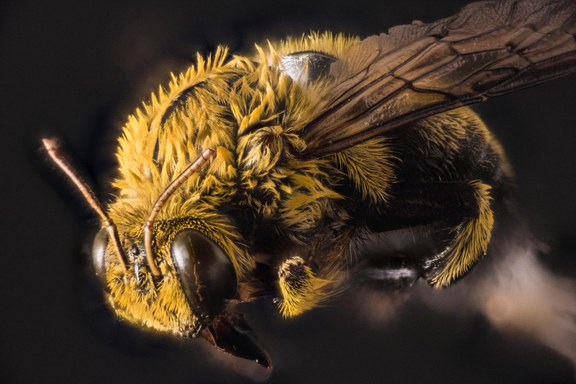
An international team of researchers has discovered evidence of 27 previously unknown viruses in bees. The finding could help scientists design strategies to prevent the spread of viral pathogens among these important pollinators.
June 14, 2018
The spotted lanternfly is starting to sour the grape and wine industries in southeastern Pennsylvania, and research underway in Penn State's College of Agricultural Sciences aims to spoil the invasive pest's party.

June 11, 2018
An analysis of employment change in the state since 2001 suggests the existence of "two Pennsylvanias" during the period from 2001 to 2017, according to economists in Penn State's College of Agricultural Sciences. The newly released report shows a sharp divide between southeastern Pennsylvania, with mainly job growth, and the rest of the state, with primarily job decline.

June 5, 2018
Development of wound dressings made of semi-synthetic biomaterials will be the focus of a five-year, $2 million grant from the National Institutes of Health's National Institute of Arthritis and Musculoskeletal and Skin Diseases. Once developed, this new kind of wound dressing would promote faster and more complete healing for the millions of people who suffer from skin wounds.
May 30, 2018
At the least, wastewater from oil and gas drilling should be treated in a waste treatment facility before it is used on dirt roads to suppress dust or deice roads. At the best, affordable, nontoxic dust suppressants should be developed and used, according to a multidisciplinary team of researchers.

May 29, 2018
Zombie ants clamp on to aerial vegetation and hang for months spewing the spores of their parasitic fungi, but researchers noticed that they do not always clamp on to the same part of the plant. Now the researchers know that the choice of leaves or twigs is related to climate and that climate change forced the fungi to adapt to local conditions.

May 28, 2018
Posttraumatic stress disorder (PTSD) caused by traumatic military experiences is associated with feelings of anxiety, anger, sadness and/or guilt. New Penn State research is evaluating how PTSD symptoms increase risks for academic difficulties as well.

May 16, 2018
Hillary Peterson is every brown marmorated stink bug's worst nightmare. The Penn State doctoral degree student does not intend to rest professionally until she and other entomologists devise a way to reduce burgeoning populations of the invasive insect, originally from Asia, which are damaging crops and aggravating people. The goal of their research is to develop biological controls to interfere with the pest's reproduction.
Office for Research and Graduate Education
Address
217 Agricultural Administration BuildingUniversity Park, PA 16802-2600
- Email agresearch@psu.edu
- Office 814-865-3136
Office for Research and Graduate Education
Address
217 Agricultural Administration BuildingUniversity Park, PA 16802-2600
- Email agresearch@psu.edu
- Office 814-865-3136
