
November 8, 2017
Penn State’s research expenditures reached a record high of $863 million for the 2016-2017 fiscal year, an increase of $27 million, according to Vice President for Research Neil Sharkey. The total included $534 million in federal funds, and $329 million from a combination of private funders, the Commonwealth, and university sources.

November 8, 2017
A chemical used in plastic packaging may get passed from mother to offspring during pregnancy, affecting the gut bacteria of the young. Researchers suggest this could increase the possibilities of inflammation-related conditions, such as colon cancer and type 2 diabetes, for the offspring later in life.

November 7, 2017
Farmers can see sustainability principles in action with just a few mouse clicks, thanks to an interactive "virtual farm" web site developed by researchers in Penn State's College of Agricultural Sciences and Penn State Extension, in partnership with the project's lead, the University of Wisconsin-Madison, Cornell University and the Dairy Innovation Center.

November 7, 2017
As populations of the invasive spotted lanternfly explode — and the state-imposed quarantine area in southeastern Pennsylvania expands — researchers in Penn State's College of Agricultural Sciences are looking for solutions to help stop the insect's spread and save agricultural crops from serious damage.

November 7, 2017
UNIVERSITY PARK, Pa. — A fungal parasite that infects ants and manipulates their behavior to benefit the fungus' reproduction accomplishes this feat without infecting the ants' brains, according to a study led by Penn State researchers.

November 7, 2017
With amphibian populations declining around the world and funds to find the causes scarce, a team of Penn State researchers has shown that an unorthodox tactic will make it easier and therefore less expensive to capture adult salamanders and frogs.

November 6, 2017
A new summer internship, which will be available to undergraduate students with a veterinary research interest, is the most recent in a series of collaborations spanning a century-old partnership between Penn State and South China Agricultural University.

November 1, 2017
With its 50-year-old E. coli Reference Center, Penn State long has been at the forefront in isolating bacteria from animals, humans and the environment. The University will continue its leading role Nov. 6-8 when it hosts an international group of experts to propose how to transition one of the most fundamental tests for E. coli into a genomics-based assay.

October 25, 2017
Entomologists from Penn State are working to apply what they have learned by studying the Mid-Atlantic region's brown marmorated stink bug infestation — which peaked between 2010 and 2013 — to similar recent problems impacting the Republic of Georgia in eastern Europe.

October 19, 2017
A test to determine whether bitter pit — a disorder that blindsides apple growers by showing up weeks or months after picking — will develop in stored Honeycrisp apples was developed by a team of Penn State researchers, promising to potentially save millions of dollars annually in wasted fruit.

October 19, 2017
Four new Fulbright Scholars, who arrived at the College of Agricultural Sciences in August, are looking to economics, sociology, and soil and plant science research for ways to put Colombia at the forefront of the world's cacao production. Under the guidance of faculty at Penn State, they will attempt to tackle some of the country's most pervasive issues, from education to production challenges and corruption.

October 13, 2017
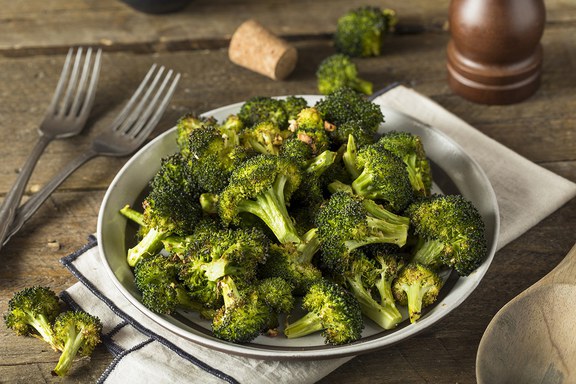
Cruciferous vegetables -- such as broccoli, brussels sprouts and cabbage -- may help trigger a receptor in the gut that can improve gut function. In a study on mice, eating broccoli led to a better ability to withstand digestive irritants. The researchers also suggest that the mechanism might improve barrier function -- keeping nutrients in and toxins out of the intestinal lining -- and that could limit the damage of inflammation.
October 9, 2017
Five new faculty members have joined the Department of Veterinary and Biomedical Sciences in the College of Agricultural Sciences.
October 9, 2017
Emily Seiger, a community, environment and development major in the College of Agricultural Sciences, is gaining insight into problems related to food safety, hygiene and food security around the world.

October 4, 2017
A grant from the U.S. Department of Agriculture will enhance an innovative Penn State graduate training program in entomology and ecology aimed at helping to solve the multifaceted problem of pollinator decline.

October 3, 2017
Climate change will not significantly impair animal agriculture in the Northeast region of the United States, according to a multidisciplinary team of researchers, who point out there are many variables in the future scenario they envision.

September 29, 2017
Researchers who developed a new mobile application that uses artificial intelligence to accurately diagnose crop diseases in the field have won a $100,000 award to help expand their project to help millions of small-scale farmers across Africa. David Hughes, associate professor of entomology and biology, Penn State, leads the project with James Legg, of the International Institute of Tropical Agriculture.

September 20, 2017
An inexpensive biomaterial that can be used to sustainably replace plastic barrier coatings in packaging and many other applications has been developed by Penn State researchers, who predict its adoption would greatly reduce pollution.

September 20, 2017
Colorful fruits and vegetables -- like the purple potato -- may contain compounds that help fight some types of cancer. An international team of researchers studied the anti-cancer effects of purple potatoes in pigs. This could be another step in finding prevention strategies and cancer treatments for patients.

September 15, 2017
A faculty member in Penn State's College of Agricultural Sciences has received a $7.3 million grant for innovative research on a cellular protein that could be a target for enhancing immune function in response to a variety of diseases and environmental toxins. Gary Perdew, John T. and Paige S. Smith Professor in Agricultural Sciences, received the award from the National Institute of Environmental Health Sciences, part of the National Institutes of Health.

September 12, 2017
Potential disparities in fruit and vegetable intake in Mexican-American children may be placing them at greater risk for obesity and related health problems, according to researchers at the University of Texas Rio Grande Valley and Penn State.

September 7, 2017
A newly released report examines how flooding and recent changes to the federal flood insurance program are impacting rural Pennsylvania in unique ways.

September 7, 2017
A shift in consumer behavior is prompting some poultry producers to change the manner in which chickens are housed and cared for, and research underway in Penn State's College of Agricultural Sciences will help them convert from traditional caged housing to noncaged systems that continue to safeguard the health and safety of flocks and employees.

August 31, 2017
Ongoing research conducted by Nicole Webster, associate professor of youth and international development in the Department of Agricultural Economics, Sociology, and Education, examines the role of youth in civic engagement and social change.

August 31, 2017
If a human mother is stressed while pregnant, research shows her child is much more likely to have emotional, cognitive or even physiological problems, such as attention deficit, hyperactivity, anxiety, language delay, obesity, diabetes and hypertension. Conversely, the results of maternal stress on the offspring of other animals — particularly wildlife under threat from predators — is believed to be positive, and contributes to their survival.

August 30, 2017
Plant-based sensors that measure the thickness and electrical capacitance of leaves show great promise for telling farmers when to activate their irrigation systems, preventing both water waste and parched plants, according to researchers in Penn State's College of Agricultural Sciences.

August 28, 2017
A protein may be a key part of a complex molecular cascade that can both cause and inhibit tumors in certain types of cancer, including skin and lung cancers. Penn State researchers suggest that understanding the basic biology of cancer can help the future design of anti-cancer therapies that attack cancer, but leave healthy cells alone.

August 24, 2017
Alex Barna, a junior from Aliquippa, Pennsylvania, has discovered an opportunity to distinguish himself from other pre-med students in the College of Agricultural Sciences' immunology and infectious disease major.

August 24, 2017
To help researchers improve their science communications, the Institutes of Energy and the Environment (IEE) and the Edna Bennett Pierce Prevention Research Center will host a plenary featuring four national journalists. The plenary will take place at 4 p.m. on Wednesday, Oct. 4, in Pike Auditorium (22 Biobehavioral Health Building).

August 24, 2017
It cannot run away from the fly that does it so much damage, but tall goldenrod can protect itself by first "smelling" its attacker and then initiating its defenses, according to an international team of researchers.

Office for Research and Graduate Education
Address
217 Agricultural Administration BuildingUniversity Park, PA 16802-2600
- Email agresearch@psu.edu
- Office 814-865-3136
Office for Research and Graduate Education
Address
217 Agricultural Administration BuildingUniversity Park, PA 16802-2600
- Email agresearch@psu.edu
- Office 814-865-3136
