WFS 499: Conservation and Ecology in India

Experience the ultimate global destination for studying evolutionary ecology - The Galapagos Islands

All course information is listed within this syllabus.
College of Agricultural Sciences faculty-led international embedded courses, summer programs, and more.

HORT 499: Gardens of England

Three Penn State alumni now working at the Institute of Energy and the Environment are using the hands-on experiences, mentorship and technical training they gained as students to advance environmental research.

When October 12, 2026, 11:30 AM - 4:30 PM
Get to know Ag Sciences at Penn State Day, designed for high school seniors to visit and explore University Park. Enjoy information fairs and sessions, a campus tour, and more. Register today!

Thinking about a future in the Agricultural Sciences? Come visit us at the University Park campus or book a virtual visit to learn more about our college, majors and community.
"That general feeling of being in a tight knit community because the college itself is a small community within Penn State is my favorite memory."

"My Penn State education definitely influenced my ability to work hard and collaborate, given the diversity of people at Penn State. One has to be able to connect with people and understand that everyone has unique experiences and backgrounds that influence their way of thinking."

The International Plant Production Society offers scholarships for qualifying students to cover registration costs for annual conferences. This year's conference will take place at the Amway Grand Plaza Hotel in Grand Rapids, Michigan September 22-25, 2026.
“The degree qualified me for the job. My network got my foot in the door.”

Explore how food, agriculture, local communities, and the environment connect as you tackle real-world food security challenges in Vietnam.


Those interested in learning about methods of safely preserving wild game can attend upcoming Penn State Extension workshops and a webinar.
All course information is listed within this syllabus.
Considering undergraduate research this year? Earn wages while gaining valuable experience.
If you're passionate about agriculture and eager to take your leadership skills to the next level, we have an exciting opportunity for you! The Agriculture Future of America (AFA) Leaders Conference is November 12-15, 2026, in Kansas City, Missouri, and applications are now open!

All course information is listed within this syllabus.
Kathryn Brasier has been named faculty director of graduate education in Penn State’s College of Agricultural Sciences, bringing more than two decades of experience in graduate education, mentorship and academic leadership at Penn State to the role.
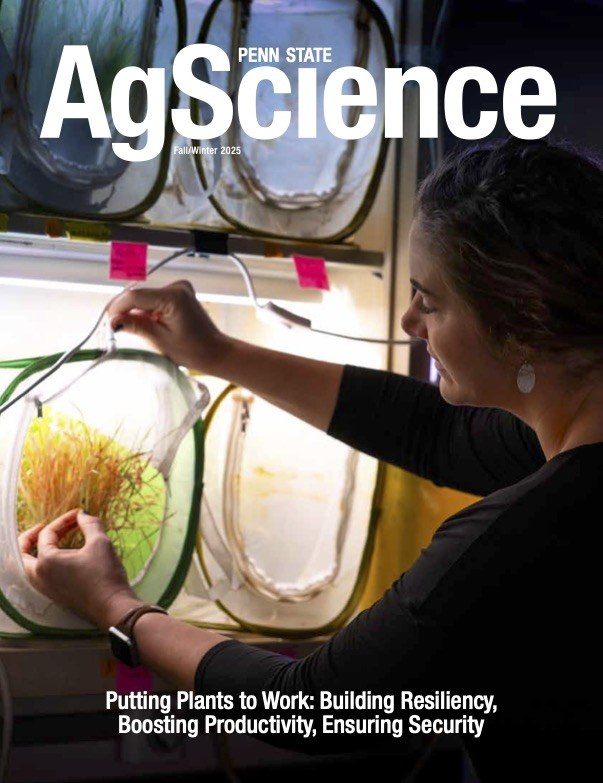
Latest Issue
Features
Predictably Unpredictable
Building resilient crops for a changing world
A Passion for Plants
Cultivating the future of plant science
A Force of Nature
Ag Sciences leads the new Center for Plant Excellence
Shaping the Future of Agriculture
New Dean's Leadership Council to help guide future in the College of Ag Sciences