
Advancing knowledge and practice on economically, environmentally, and socially sustainable agricultural systems in urbanized landscapes.
Agricultural Sustainability in Urbanized Landscapes
Issue
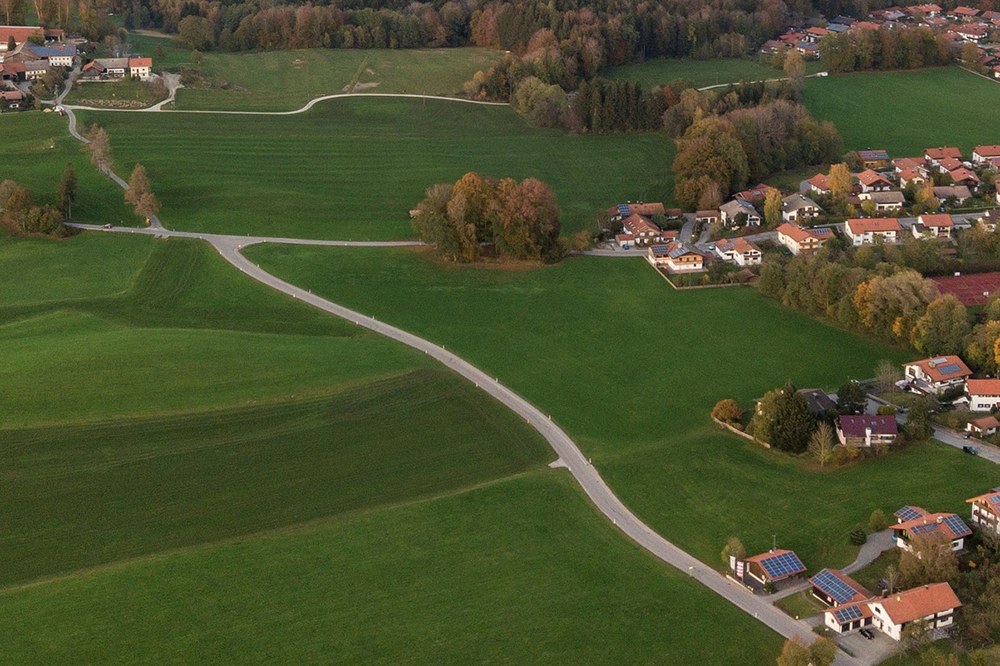
Agricultural systems located in metropolitan counties and in non-metropolitan counties adjacent to metro areas are vital to the sustainability of agriculture. More than 60% of net farm income in the United States in 2017 came from these urbanized landscapes and, in Pennsylvania, it was 93%. Communities and consumers in urbanized landscapes value agriculture for locally produced foods, open space and scenery amenities, recreational opportunities such as agritourism, and wildlife habitats. However, the sustainability of agricultural systems in urbanized landscapes is threatened by intensifying competition for land, labor, and water from urban growth and sprawl, and by water pollution, livestock odors, pests, and dust from agricultural activities.
Compared to more rural areas, agricultural systems in urbanized landscapes are characterized by higher rates of land use change, relatively high land values, higher value agricultural products, a more diverse mix of crop and livestock products, more intensive production practices, products destined more for local and regional consumption than distant markets, and better infrastructure, but often sparser networks of input suppliers and food processors. Zoning and other land use regulations, farmland preservation policies, and environmental policies also play a greater role in urbanized landscapes.
The research, education, outreach, and extension on this Critical Issue Initiative are proceeding with close stakeholder engagement using a shared discovery and co-learning process. This stakeholder engagement is designed to create a bridge between research and practical application by improving research relevance and stakeholder knowledge and practices.
Convener
Patrick Drohan, Ph.D.
Professor of Pedology
Director of Graduate Studies, Department of Ecosystem Science & Management
Associated Members
Associates
- Dave Abler, Professor of Agricultural, Environmental, and Regional Economics and Demography
- Austin Brown, Extension Specialist, Small Ruminant Production & Management
- Melik Demirel, Huck Chair & Professor of Biomimetics*
- Heather Grab, Assistant Professor, Entomology
- Michele Grinar, Assistant Teaching Professor, Biology
- Margaret Hoffman, Assistant Professor, Landscape Contracting*
- Weiyun Hua, Assistant Teaching Professor of Agricultural & Biological Engineering
- Ran Li, Assistant Professor of Agribusiness Management
- Cibin Raj, Assistant Professor, Agricultural & Biological Engineering*
- Matthew Royer, Assistant Research Professor, Director Agriculture & Environment Center*
- Josephine Wee, Assistant Professor, Food Science*
Affiliates
- Flor Acevedo, Assistant Professor, Entomology/Arthropod Ecology*
- Bishwodeep Adhikari, Assistant Professor of Civil Engineering
- Natalie Boyle, Assistant Research Professor*
- Elizabeth Boyer, Professor, Water Resources*
- Danny Brent, Assistant Professor, Environmental Economics*
- Eric Burkhart, Associate Teaching Professor, Ecosystem Science and Management*
- Anil Kumar Chaudhary, Assistant Professor, Agricultural & Extension Education*
- Christine Costello, Assistant Professor of Agricultural & Biological Engineering
- Francesco Di Gioia, Assistant Professor, Vegetable Crop Science*
- Jill Felker, Lecturer, Biochemistry & Molecular Biology
- Long He, Assistant Professor, Agricultural & Biological Engineering*
- Sara Hermann, Assistant Professor, Arthropod Ecology & Trophic Interactions*
- Amy Kwasnicki, Extension Educator
- Michael Mashtare, Assistant Professor, Agricultural & Biological Engineering*
- Fameena Pandara Valappil, Assistant Professor, Agricultural and Biological Engineering
- Rui Shi, Assistant Professor, Chemical Engineering*
Related Penn State Projects
- Thriving Agricultural Systems in Urbanized Landscapes: ThrivingAg.org

Related College of Agricultural Sciences Research Impact Areas
Funding Targets
USDA AFRI Sustainable Agricultural Systems
- Integrated projects only (must combine research, education, and extension)
- Up to five years, $10 million
- Past RFAs: 2025 (RFA was posted in Jan 2025, then taken down a couple weeks later), 2024, 2023, 2022, 2021, 2018
- Past due dates
- May 15, 2025 (full proposal), March 27, 2025 (letter of intent)
- June 6, 2024 (full proposal)
- July 13, 2023 (full proposal), April 13, 2023 (letter of intent)
- July 28, 2022 (full proposal), April 27, 2022 (letter of intent)
- April 1, 2021 (full proposal), January 7, 2021 (letter of intent)
- Funded projects: http://portal.nifa.usda.gov/enterprise-search/ss/1575
- $9 million awarded to a Penn State team in 2019 for Thriving Agricultural Systems in Urbanized Landscapes
- Penn State is also part of the $10 million Iowa State-led project Consortium for Cultivating Human And Naturally reGenerative Enterprises (C-CHANGE)
USDA AFRI Foundational and Applied Science
- Past RFAs: FY 2025-26 (RFA was posted, then taken down in Jan 2025, then replaced with the FY 2026 RFA below), FY 2024, FY 2023, FY 2022
- FY 2026 Request for Applications. See below for highlights on individual subprograms.
- 1f. Pollinator Health: Research and Applications (p.23-25 in the FY 2026 RFA)
- The program seeks projects that:
- Improve our fundamental understanding of the factors and underlying mechanisms that drive pollinator declines and develop innovative applied solutions that mitigate these factors
- Promote healthy populations of pollinators in agricultural systems
- Address factors that influence the abundance, biodiversity, and health of pollinators, including biotic, abiotic as well as economic elements
- Study the functions of the pollinator microbiome to help promote healthy pollinator populations
- Study the impacts of changes in bee gut microbial communities on nutritional health or disease resistance
- Develop and evaluate innovative genetic/genomic tools, diagnostic techniques, alternative chemicals (such as new miticides to control Varroa or biologically-based strategies to combat key pests of pollinators) that are likely to be adopted by stakeholders to ensure healthy pollinators
- Include informal training, workshops, or demonstration projects related to pollinators in agriculture and associated systems
- $750K over 3-5 years for Standard Grants, $900K with specific partnerships (see p.101-102 in the RFA)
- Past due dates
- August 21, 2025 (extended to December 11, 2025)
- August 22, 2024
- August 24, 2023
- August 25, 2022
- The program seeks projects that:
- 4a. Soil Health (p.49-51 in the FY 2026 RFA)
- The program seeks projects that:
- Develop tools, practices, techniques, and innovations aimed at improving soil health and strengthening the sustainability of agricultural production systems
- Advance scientific understanding of soil physical and biogeochemical processes and interactions
- Contribute to the assessment, development, and adoption of models, decision support tools and new management/conservation practices that will improve or maintain soil health and productivity
- Develop soil health solutions that are grounded in interactions between natural and human dimensions of agricultural systems focusing on effective economic management
- $750K over 3-5 years for research-only projects, $900K with specific partnerships (see p.101-102 in the RFA)
- Past due dates
- September 11, 2025 (extended to December 4, 2025)
- September 12, 2024
- September 14, 2023
- September 1, 2022
- The program seeks projects that:
- 4b. Water Quantity and Quality (p.51-54 in the FY 2026 RFA)
- The program seeks projects that:
- Improve watershed science and the forecasting and modeling of water in agriculture
- Reduce freshwater demand (both ground and surface water) for agricultural irrigation and the nutrient demand for maximum crop production by substituting the use of innovative water use technologies, management practices, and/or other nontraditional water sources
- Protect water quality of surface and groundwater systems through improved nutrient and pest management
- $650K over 3-5 years for research-only projects ($800K with specific partnerships, see p.101-102 in the RFA), $750K over 3-5 years for integrated projects ($900K with specific partnerships)
- Past due dates
- September 4, 2025 (extended to December 4, 2025)
- September 5, 2024
- September 7, 2023
- September 1, 2022
- The program seeks projects that:
- 6a. Small- and Medium-Sized Farms (p.68-69 in the FY 2026 RFA)
- The program seeks projects that:
- Develop effective strategies and tools through research, education, and extension/outreach programs to meet the needs of small- and medium-sized farmers, ranchers, and forest landowners
- Advance the production, profitability, and post-harvest handling of specialty crops, including high-value niche market crops, medicinal crops, aromatic crops, and crops grown for essential oils
- Examine the feasibility of small- to mid-scale processing for fresh fruits and vegetables, frozen fruits and vegetables, value-added processing for institutional buyers, or small-scale meat processing
- Identify and develop effective physical or digital tools or equipment that improve production, labor management, and profitability for small- and medium-sized operations
- Research and develop effective strategies to improve efficient local and regional food systems
- $650K over 3-5 years for Standard Grants
- Past due dates
- September 4, 2025 (extended to December 11, 2025)
- August 15, 2024
- August 17, 2023
- September 22, 2022
- The program seeks projects that:
- 6b. Economics, Markets, and Trade (p.69-71 in the FY 2026 RFA)
- The program seeks projects that:
- Analyze agricultural market structure and performance, competitiveness in international trade and domestic markets, ag production and resource use, consumer behavior, farm labor and immigration policy, technology development and adoption, and science and innovation policy
- Examine the economics of agriculture and food policy, including changes in trade, immigration, crop insurance, price stabilization, and income support
- Study the factors affecting farm labor shortages and the development and adoption of labor-saving technologies
- Examine the causes and consequences of food and nutrition insecurity
- Assess the economic impact of policies and regulations designed to advance the bioeconomy
- Examine the impact of disasters on food supply chain resilience, ag production, and consumer behavior
- $650K over 3-5 years for Standard Grants, $800K with "specific partnerships" (see p.101-102 in the RFA)
- Past due dates
- October 2, 2025 (extended to December 4, 2025)
- October 3, 2024
- October 5, 2023
- October 6, 2022
- The program seeks projects that:
- 6e. Environmental and Natural Resource Economics (p.75-77 in the FY 2026 RFA)
- The program seeks projects that:
- Study the relationship between agriculture, natural resource conservation, and the environment
- Advance economic theories, methods, tools, analyses, and applications that contribute to understanding an ecological approach to agriculture (including forestry and aquaculture)
- Advance efforts toward the development of standardized nonmarket valuation and benefit transfer methods
- Inform policy efforts related to agriculture, natural resources, and environmental conservation
- Develop metrics to assess changes in the value of ecosystem services resulting from the adoption of conservation management practices at various scales
- Explore the economic efficiency impacts of alternative approaches for monitoring and enforcing conservation compliance
- $650K over 3-5 years for Standard Grants, $800K with "specific partnerships" (see p.101-102 in the RFA)
- Past due dates
- September 11, 2025 (extended to December 11, 2025)
- September 12, 2024
- September 14, 2023
- September 15, 2022
- The program seeks projects that:
Pennsylvania Department of Agriculture (PDA)
- PDA Agricultural Research Grants
- The FY 2025-26 solicitation was released June 7, 2025, with applications due July 25, 2025. PDA was particularly interested in funding projects that would:
- Examine the economic impact of pest infestations like Phorid Flies and identify options for mitigation
- Measure the impacts of conservation and farm management practices that have not received Federal or State government cost-sharing assistance
- Implement the Pennsylvania Pollinator Protection Plan (developed by Penn State's Center for Pollinator Research)
- Gather and analyze local food action plans
- Study the impact of the Pennsylvania Farm Bill investments
- Analyze the level of food insecurity in PA and identify solutions
- Conduct a workforce survey to assist PA in responding to the current and projected needs of agricultural industries
- Identify financial gaps for farms and agribusinesses and provide targeted recommendations to bridge these gaps
- Incentivize urban agriculture land access and stewardship
- Identify soil testing and remediation strategies for urban agriculture and examine how to operationalize these strategies and measure their benefits and implementation costs
- Assess the quantity and quality of available on-farm and off-farm housing for agricultural workers, including farm owners
- Review and recommend alternatives to the current PA Milk Board Over-Order Premium (based on what would be most advantageous to the PA dairy industry)
- Analyze and map energy generation from agricultural products and waste products and identify limitations of interconnections to commercial utility infrastructure
- Analyze options to reduce greenhouse gases emitted by normal agricultural operations
- Identify challenges and opportunities with agrivoltaics and digestors in PA
- Assess PA's biogas opportunities (in terms of feedstocks, energy production, and value-added products)
- Determine the effectiveness of small-scale anaerobic digesters (on PA farms) to reduce nutrients and emissions
- Evaluate the extent of wildlife crop damage in PA and provide strategic recommendations for mitigation
- Assess the fiscal and consumer health impacts of changing Medicare rules to allow for purchases of fresh foods under a Medicare plan
- Study the One Health implications of interconnected human, animal, and environmental systems in PA
- Study aspects of animal health that are important to PA animal agriculture
- Promote the diagnosis of animal diseases important to PA animal agriculture
- Improve the productivity and welfare of agricultural animals in PA
- Assess opportunities to improve the dairy processing in PA and suggest strategies for dairy industry growth and development
- Develop a strategy to reduce incidents of chronic wasting disease
- Improve the management and stewardship of food processing residuals
- Develop biodegradable packaging alternatives for food and beverage products
- Identify pharmaceutical or industrial uses for milk proteins or other milk components
- Assess the economic viability of converting spent mushroom substrate to biochar (for use as a soil amendment or as a source of energy or biomass)
- Study and develop novel manure management technologies
- Investigate what technology farmers use now and what technology them may use in 5 years
- Assess the application and deployment of augmented reality on animal and plant industries in PA
- Assess the adoption of artificial intelligence and its potential applications to farms and food systems in PA
- Quantify the benefits of wood-based biochar for nutrient management and conservation practices
- Past calls for Agricultural Research Grant applications:
- FY 2024-25 solicitation due June 7, 2024 (released April 27, 2024)
- FY 2023-24 solicitation due May 15, 2023 (released April 15, 2023)
- FY 2022-23 solicitation due June 3, 2022 (released April 9, 2022)
- FY 2021-22 solicitation due June 25, 2021 (released May 29, 2021)
- FY 2020-21 solicitation due June 9, 2020 (released May 9, 2020)
- FY 2019-20 solicitation due June 28, 2019 (released May 25, 2019)
- The FY 2025-26 solicitation was released June 7, 2025, with applications due July 25, 2025. PDA was particularly interested in funding projects that would:
Chesapeake Bay Trust
- Pooled Monitoring Initiative's Restoration Research Award Program
- List of all research questions from past RFPs (FY15 through FY25)
- The FY 2026 Request for Proposals was released on November 6, 2025, with proposals due January 29, 2026
- Program contacts:
- Sadie Drescher at sdrescher@cbtrust.org or 410-974-2941, ext. 105
- Mimi Abdu at mabdu@cbtrust.org or 410-974-2941, ext. 162.
- Page 5 of the FY26 RFP contains questions related to the effectiveness of stream restoration efforts at a watershed scale, namely:
-
Can a signal from restoration activities be measured relative to a control site (before vs. after restoration activities)?
-
How does the location of BMPs in the watershed and the distribution of different land use types in the watershed (impervious, pervious, forest, etc.) impact restoration outcomes?
-
Given the variability in watersheds over time, how can we use historic water quality conditions to determine the potential cumulative effects of restoration activities over long time scales (5, 10, or more years)?
-
-
Page 6 contains questions related to the effectiveness of restoration efforts at a project scale, namely:
-
Given that stream restoration efforts sometimes lead to restored physical habitats without accompanying improvements in the biological communities, how can stream restoration activities be more effective at obtaining ecological uplift?
-
How can metrics help quantify functional change at the project scale (e.g., community composition, species diversity, functional niches, and individual IBI components)?
-
How do erosion and sediment transport vary under different storm scenarios, and how can watershed restoration and flood mitigation strategies influence or reduce these effects?
-
-
Page 7 contains questions related to emerging pollutants like bacteria, chloride, thermal pollution, and toxins, namely:
-
What are the major bacteria sources, and what management efforts are effective?
-
What BMP design and siting methods will reduce thermal impacts to streams and watersheds?
-
What is the cumulative impact of thermal mitigation practices in urban and rural watersheds?
-
What innovative techniques could the monitoring community use to measure PCB concentrations during storm events?
-
-
Page 8 contains questions related to social science research and BMP adoption, namely:
-
What are the adoption rates of practices under different types of interventions (e.g., in-person versus remote interaction, paid incentives, enforcement actions, etc.)?
-
What social science interventions are most effective at increasing local civic engagement in support of watershed stewardship programs and policies?
-
How can community-centric stewardship programs be developed to address barriers to adoption?
-
-
Pages 8-10 contain questions related to clarifying tradeoffs in restoration practices, namely:
-
Since restoring a given site may involve reducing certain functions (e.g., trees may be removed to create a wetland), how can we quantify the overall improvement when the units that are used to measure the restored functions are different than the units of the functions that may be degraded?
-
Stream restoration often entails reconnecting the floodplain to the stream—how does this change in floodplain connectivity and groundwater levels impact tree survivability, shading, and riparian ecology?
-
"Living shorelines" can protect against floods, reduce erosion, provide wildlife habitat, and remove excess nutrients—how does the design of living shorelines affect the type and extent of ecological services produced?
-
- Past RFPs from the Pooled Monitoring Initiative's Restoration Research Award Program:
- FY25 RFP due January 23, 2025 (released November 8, 2024)
- FY24 RFP due January 25, 2024 (released November 1, 2023)
- FY23 RFP due January 26, 2023 (released November 9, 2022)
- FY22 RFP due January 27, 2022 (released November 10, 2021)
- FY21 RFP due January 29, 2021 (released November 2020)
- FY20 RFP due January 30, 2020 (released November 1, 2019)
- FY19 RFP due February 21, 2019
- FY18 RFP due February 21, 2018 (released November 28, 2017)
- FY17 RFP due February 21, 2017 (released November 17, 2016)
- FY16 RFP due March 10, 2016 (released December 2, 2015)
- FY15 RFP due March 19, 2015 (released December 8, 2014)
-
Past proposals submitted to the Pooled Monitoring Initiative's Restoration Monitoring Program by Penn State teams:
- "Optimizing eDNA protocols for stream restoration biodiversity assessments in Maryland: A comprehensive literature review and gap analysis" ($50K awarded in 2025)
- "Urban forests for all: Advancing Urban Tree Adoption and Maintenance in Pennsylvania Communities" ($233K awarded in 2025)
-
"Assessing the feasibility of assisted macroinvertebrate colonization in achieving ecological uplift in restored streams" ($313K awarded in 2023)
- "Impacts of urban soil compaction on stormwater runoff volumes and BMP sizing" ($188K awarded in 2023)
-
"Improving the sustainability, cost-effectiveness, and ecological benefits of bioretention plantings" ($247 requested in 2022)
- "Impacts of salt loading on nutrient and metal processing in stormwater bioretention" ($196K awarded in 2021)
Foundation for Food and Agricultural Research (FFAR)
- Rapid Outcomes from Agricultural Research (ROAR) program
- The ROAR program funds rapid research related to response, prevention, or mitigation of emerging pest and pathogen outbreaks that threaten U.S. food supplies or agricultural systems
- The program is open year-round and awards one- to two-year grants of up to $250K to develop diagnostics, monitoring, and mitigation strategies.
- All awards require a 1:1 match from a non-federal funding source
- Past awards have gone to combat:
- The H5N1 variant of Highly Pathogenic Avian Influenza
- Fusarium wilt in strawberries and lettuce
- Invasive ticks
- Soybean red crown rot
- Swine viruses
- Applicants are encouraged to form broad-based coalitions to increase research collaboration and maximize the agricultural sector's adoption of new knowledge, technologies, and practices
- FFAR accepts concept note submissions year-round for programs and projects that align with their four priority areas:
- Cultivating Thriving Production Systems
- Advancing crop productivity and resilience against biotic and abiotic stress
- Improving animal health and welfare while maintaining or increasing productivity
- Designing adaptive production systems that advance farmers' profitability now and in the future
- Cultivating efficient animal and crop systems that protect and restore natural resources
- Sustaining Vibrant Agroecosystems
- Connecting farmers and scientists to co-create solutions that build and maintain healthy, productive agroecosystems that can withstand severe weather events
- Understanding drivers underlying producers' decisions to adopt improved practices and technologies
- Helping producers, agricultural educators, and stakeholders evaluate tradeoffs associated with transitioning to new practices and technologies
- Developing and refining knowledge, technology, and practices that address soil, water, and environmental challenges
- Bolstering Healthy Food Systems
- Advancing novel foods, food products, and systems-level approaches to enhance human health and nutrition
- Enhancing the efficient production and delivery of nutritious, safe foods
- Improving food safety and human health by reducing food system contaminants and mitigating the impacts of environmental contaminants in agriculture
- Promoting a thriving and profitable bioeconomy that offers affordable products to consumers
- Strengthening the Scientific Workforce
- Expanding the food and agriculture workforce by attracting relevant talent from adjacent and non-traditional disciplines
- Identifying gaps in the agricultural scientific workforce and developing strategies for attracting new food and agriculture researchers
- Incentivizing career-long engagement in food and agriculture research
- Cultivating Thriving Production Systems
- Proposals submitted to FFAR by Penn State teams:
- "Making resilience realistic: From cover crop soil legacies to crop protection across management systems" ($937K requested in 2025)
- "Developing forage-based approaches and direct-fed microbial supplements with enhanced concentration of nitro-compounds for mitigation of enteric methane emissions in ruminants" ($491K requested in 2025)
- "Diseases in dairy cattle: Much more than just a vet bill! Evaluating the environmental and economic impacts of diseases in dairy cattle" ($636K requested in 2025)
- "Sustaining agroecosystems through perennial root systems" ($450K requested in 2025)
- "Evaluating nitrogen fixing microbial products in corn under varying environmental conditions" ($125K requested in 2025)
- "Unveiling the genetic controls of metabolic herbicide resistance for enhanced site-specific weed management" ($450K requested in 2024)
- "Investigation of natural nitro-compounds as a viable strategy to reduce enteric methane emission from ruminants" ($456K awarded in 2023)
- "Development of novel methanogenesis inhibitors in ruminants" ($759K awarded in 2023)
- "Are biological soil health indicators informative? A validation study looking at sensitivity through time and with management strategies" ($445K requested in 2022)
- "Leveraging legume selection and evolutionary principles to maximize nitrogen fixation by microbes in agricultural fields" ($450K requested in 2021)
- "Designing an epigenetic crop resilience breeding system in sorghum" ($1M requested in 2020)
- "Harnessing multi-trophic chemical ecology to obtain sustainable pest control and improved soil health" ($300K awarded in 2019)
- "Location, Location, Location: Developing Tools for Selection and Management of Landscapes to Promote Healthy Bee Populations" ($1.18M awarded in 2018)
The William Penn Foundation
- One of the foundation's five program areas is Environment and Public Spaces, focusing on protecting communities in the Greater Philadelphia area from environmental degradation. Among other things, the program is looking to:
- Reduce sewage overflow
- April 23, 2026 submission deadline (RFP to be released March 18, 2026)
- Program officer: Nathan Boon
- Increase green stormwater infrastructure
- July 30, 2026 submission deadline (RFP to be released June 17, 2026)
- Program officer: Nathan Boon
- Develop community-based climate resilience plans
- October 2026 submission deadline (RFP to be released September 2026)
- Program officer: Allison Jones
- Increase urban garden parcels and keep them safe from development or legal threats
- October 2026 submission deadline (RFP to be released September 2026)
- Program officer: Jazmine da Costa
- Reduce sewage overflow
- Proposals submitted by Penn State personnel:
- "Click, Coach, Connect: Supporting Quality Infant-Toddler Early Learning" ($413K awarded in 2017)
- "Equipping a New Generation of Infant-Toddler Leaders through a Sustainable Peer Coaching Model" ($236K awarded in 2021)
The Heinz Endowments
- Link to the grant application page: https://www.heinz.org/grants
- Food Systems and Climate, Environment, and Health are among their seven priority areas (see links for more description)
- Funded projects: https://www.heinz.org/grants/grants-awarded
- Recent awards relating to water, agriculture, and food:
- May 2025, $375K awarded to Three Rivers Waterkeeper to protect water quality and health in the urban waters of Pittsburgh and in the region
- May 2025, $242K awarded to Farm to Table Buy Local to support fresh, healthy, and local food in the Pittsburgh region
- May 2025, $438K awarded to Citizens for Pennsylvania's Future to advance sustainability, protect the environment, and foster community health
- Oct 2024, $215 awarded to Foundation for Pennsylvania Watersheds to leverage federal and state funds to improve water quality in western Pennsylvania
- Oct 2024, $40K awarded to PASA to support training and education for western Pennsylvania urban, suburban, and peri-urban farmers to improve their skills and expand their network
- May 2024, $300K awarded to the University of Pittsburgh's Water Collaborative
- May 2023, $240K awarded to Farm to Table Buy Local to increase locally grown food, improve nutrition, and assist food-insecure residents to obtain fresh and healthy food
- Proposals submitted by Penn State personnel:
- "Longitudinal Study of Young Adults in Southwestern Pennsylvania" ($3M requested in 2025)
- "Evaluation & Learning Partner: Pathways to Quality, Full-Time Employment for Young Adults" ($600K requested in 2025)
- "Visualization and Storytelling around Veteran Experiences and Outcomes" ($90K awarded in 2020)
- "Supporting families in crisis: Strengthening core skills for building resilience in young children impacted by the opioid epidemic and other adversity" ($100K requested in 2019)
- "Greater Pittsburgh Food Action Plan: Growing Community Food Assets from the Ground Up" ($380K awarded for 2017 and 2018)
- "Feasibility Study of Federal Urban Agriculture Funding for Southwest Pennsylvania" ($28K awarded in 2017)
- "Pittsburgh Food Policy Council: Growing Community Food Assets from the Ground Up" ($190K awarded in 2016)
Sustainable Chesapeake
- Working in the areas of innovation, partnership, and implementation to bridge the gap between agriculture and conservation and to deliver conservation outcomes that benefit both farmers and the Chesapeake Bay
- Creating, testing, and implementing new management practices and technologies to improve farm profit and water quality
- Current projects include:
- Proposals submitted by Penn State teams:
- "Strategic Initiatives to Achieve Regional Phosphorus Balance in the Chesapeake Bay" ($213K awarded in 2017)
- "Pennsylvania Subsurface Application of Manure Initiative" ($26K awarded in 2018)
Chesapeake Bay Foundation
- Link to active requests for proposals: https://www.cbf.org/bids-proposals/
- Past proposals submitted by Penn State teams:
- "Precision dairy feeding to reduce nutrient pollution in PA waters and the Chesapeake Bay" ($39K awarded in 2006)
- "Mine reclamation and switchgrass production with agricultural manure" ($25K awarded in 2009)
- Penn State pledged $158K worth of technical assistance for the Chesapeake Bay Foundation's proposal to NRCS's Regional Conservation Partnership Program in 2017 ("Soil health: Improving land, water, and producer profitability")
Environmental Defense Fund
- Climate-smart agriculture is a high priority---see articles and initiatives below
- Food for Thought: How EDF is Accelerating Climate Action in Food Systems Post-COP30
- Helping livestock farmers cut methane emissions
- The climate power of soil
- Can cropland soils be a part of the climate solution?
- Making the invisible loss of nitrogen visible
- The race to climate-proof agriculture
- How U.S. agriculture can adapt to escalating water risks
- Proposals submitted by Penn State personnel:
- "Orphaned and Abandoned Wells on Farms" ($30K awarded in 2025)
- "Prediction, Placement, and Prediction: Precision Agricultural Conservation Practices at Watershed Scales" ($51K awarded in 2018)
- "Prioritization, Placement, and Prediction: Advancing Water Quality Planning" ($33K awarded in 2020)
Stroud Water Research Center
- Current and past projects:
- Proposals submitted by Penn State personnel:
- "Advancing Soil Health Partnerships and Implementation in Pennsylvania" ($281K awarded in 2025)
- "Climate Resiliency through Accelerated Soil Health (CRASH)" ($98K requested in 2021)
- "Training Master Watershed Stewards for Collaboration with the Delaware River Watershed Initiative" ($200K awarded in 2016)