November 16, 2021
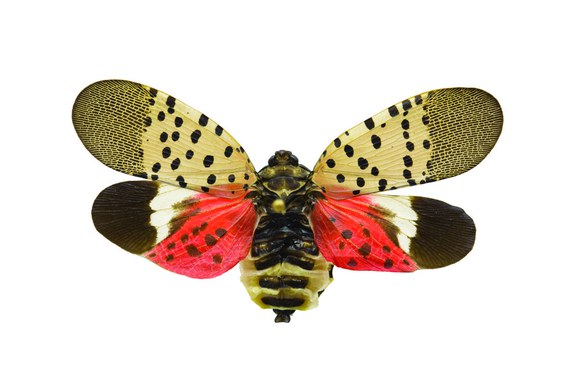
A new economic tool can help physicians, farmers and other people whose activities may influence the evolution of biological organisms, such as pathogens and insects, decide when they should invest in evolution management strategies.

November 16, 2021
Research conducted in Penn State’s College of Agricultural Sciences suggests that some Holstein dairy cattle, particularly those with white coat coloration, naturally fend off the horn fly, a parasitic insect known to cause stress and disease in grazing cattle.

November 16, 2021
PlantVillage, a platform developed by Penn State researchers that is helping tens of millions of farmers across Africa cope with the immediate challenges of climate change, will be enhanced and expanded thanks to the generosity of Jeff Dean and Heidi Hopper, whose gift includes a commitment to match other donations up to a total of $2.5 million.

November 16, 2021
Dan Stearns, J. Franklin Styer Professor Emeritus, who served as the inaugural professor and program coordinator of the landscape contracting program in Penn State's College of Agricultural Sciences, is being remembered as an extraordinary educator and mentor whose care for and commitment to students — and the landscape contracting industry — was unparalleled.

January 13, 2021
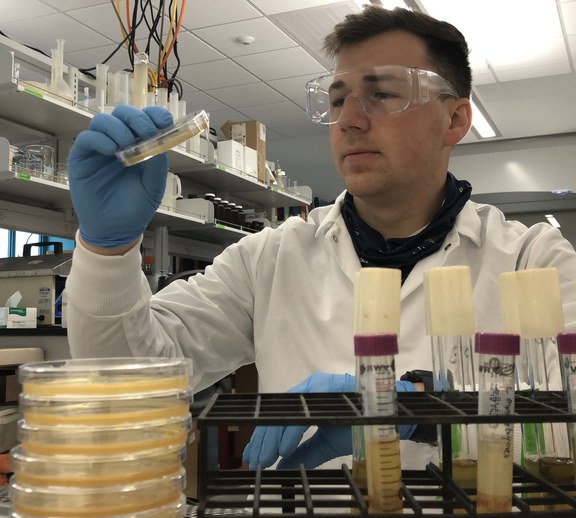
Pulsed ultraviolet light can be an effective alternative to some of the antimicrobial technologies now used by the poultry industry to kill pathogens on eggshells, according to Penn State researchers, who simulated production conditions to test the technology.
January 15, 2020
If not contained, the spotted lanternfly potentially could drain Pennsylvania’s economy of at least $324 million annually and cause the loss of about 2,800 jobs, according to a study carried out by economists in Penn State’s College of Agricultural Sciences.