
Research Impacts
Real-world solutions to real-world problems.
Research in the College of Agricultural Sciences is at the very heart of Penn State’s land-grant mission: directing our minds and assets at solving the problems and seizing the opportunities facing the people of our state, our country, and the world.
Reports
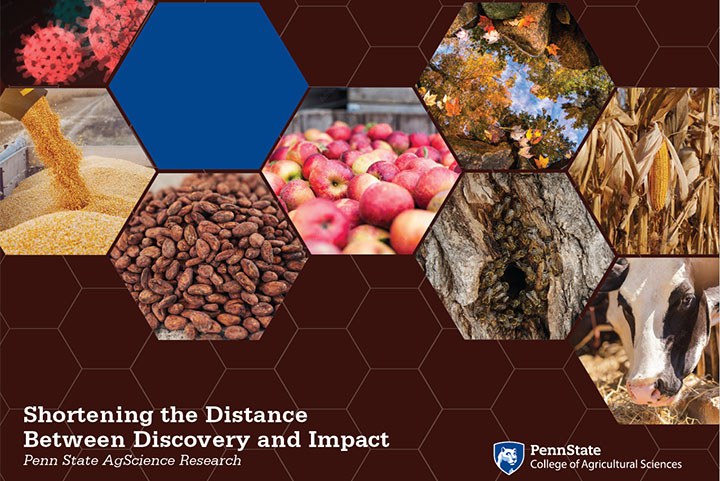
This collection showcases the impact that researchers in the college bring to some of the most pressing challenges and how they are embracing emerging technologies and innovations to foster a new paradigm of how we grow food while protecting our resources.
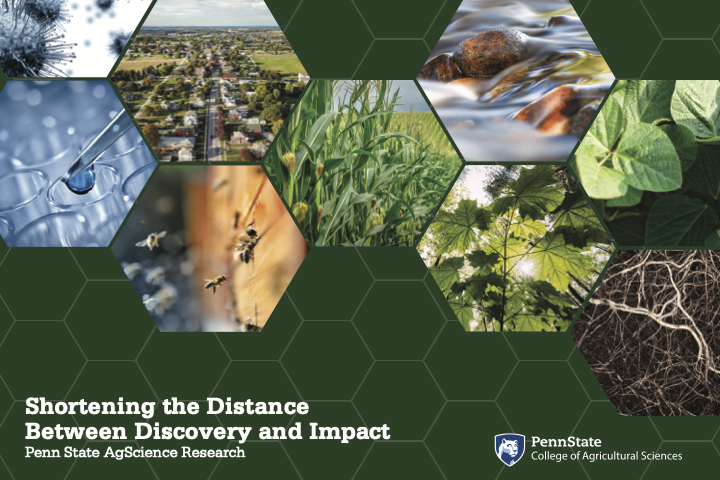
The most recent highlights of research impacts from the college demonstrate how our researchers are leveraging existing capacity and support and continuing to propel research inquiries into the next phase of discovery.
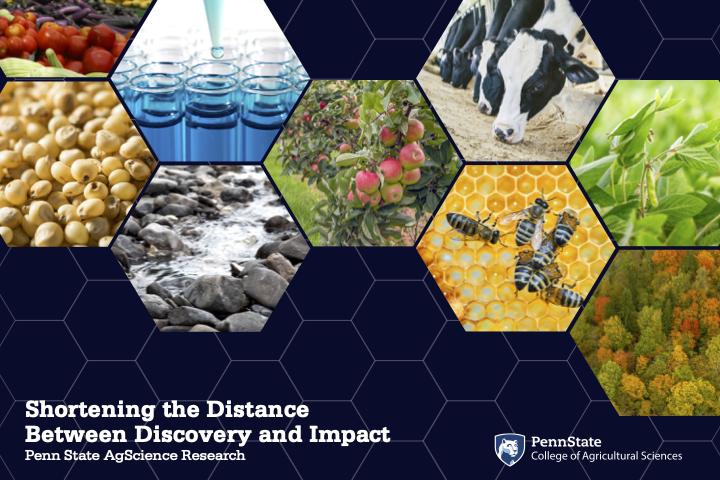
The inaugural research impacts report showcases how interdisciplinary teams in the college are arriving at novel, real-world solutions that have positive impacts on society.
View the archive of the annual plans of work and reports on accomplishments and results submitted by the college to the USDA each year.
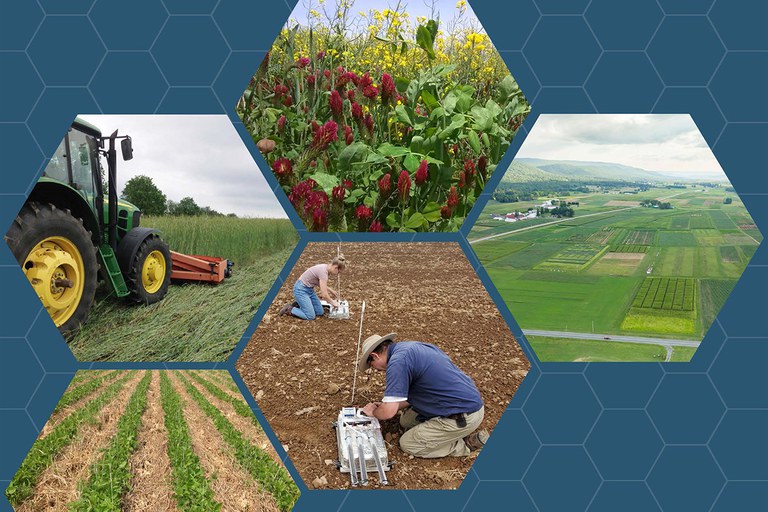
Scientists in the College of Agricultural Sciences at Penn State are developing and testing balanced, efficient, climate-smart solutions to preserve our resources while increasing productivity and profitability for producers and land managers.
Impact Area Themes
Research in the agricultural sciences addresses an extraordinarily diverse range of problems that impact our everyday lives. From the molecular to plant and livestock breeding and from farm sustainability to ecosystem modeling, our researchers are helping to ensure that solutions to problems are economically viable, socially acceptable, and equitable.

Adapting to a changing climate and performing responsibly

Addressing vulnerabilities all scales from the microbiome to food supply chains

Promoting mutually beneficial interactions among all living organisms on Earth

Encompassing all levels from soil health to the dynamics of human and animal diseases

Enhancing the economic and social well-being of people and the systems that sustain them

Revealing complex interactions between food, energy, water, and land systems that require data-driven holistic solutions
Office for Research and Graduate Education
Address
217 Agricultural Administration BuildingUniversity Park, PA 16802-2600
- Email agresearch@psu.edu
- Office 814-865-3136
